
The Number One Question We Hear About Kitchen Remodeling
If you're considering a kitchen remodel in San Diego, chances are you've already browsed Pinterest boards, saved cabinet styles, and maybe even picked out a backsplash tile. But there's one question that comes up in nearly every initial consultation we have at Sovereign Home Extensions: How long is this actually going to take?
It's a fair question. Your kitchen is the most-used room in your home. Living without it — even temporarily — affects your daily routine, your family meals, and your sanity. The good news is that when you know what to expect, the process feels a lot more manageable.
Here's a realistic, week-by-week look at what a typical San Diego kitchen remodel involves, so you can plan ahead and actually enjoy the transformation.
Before the Clock Starts: The Pre-Construction Phase
Before any hammer swings, there's a critical planning period that usually takes four to eight weeks. This is where the real foundation of a successful remodel is laid.
- Design and material selections: You'll work with your remodeling team to finalize the layout, choose cabinetry, countertops, flooring, fixtures, and appliances. Some materials — especially custom cabinets — can have lead times of four to six weeks.
- Permits: Most kitchen remodels in San Diego require at least a building permit, especially if you're moving plumbing, electrical, or gas lines. The City of San Diego's Development Services Department typically processes residential permits within a few weeks, but timelines can vary.
- Ordering materials: Once selections are finalized, everything gets ordered. Your contractor should coordinate delivery schedules so materials arrive when they're needed — not too early, not too late.
This pre-construction phase doesn't feel as exciting as demo day, but it's the reason the rest of the project runs smoothly.
Weeks 1–2: Demolition and Rough Work
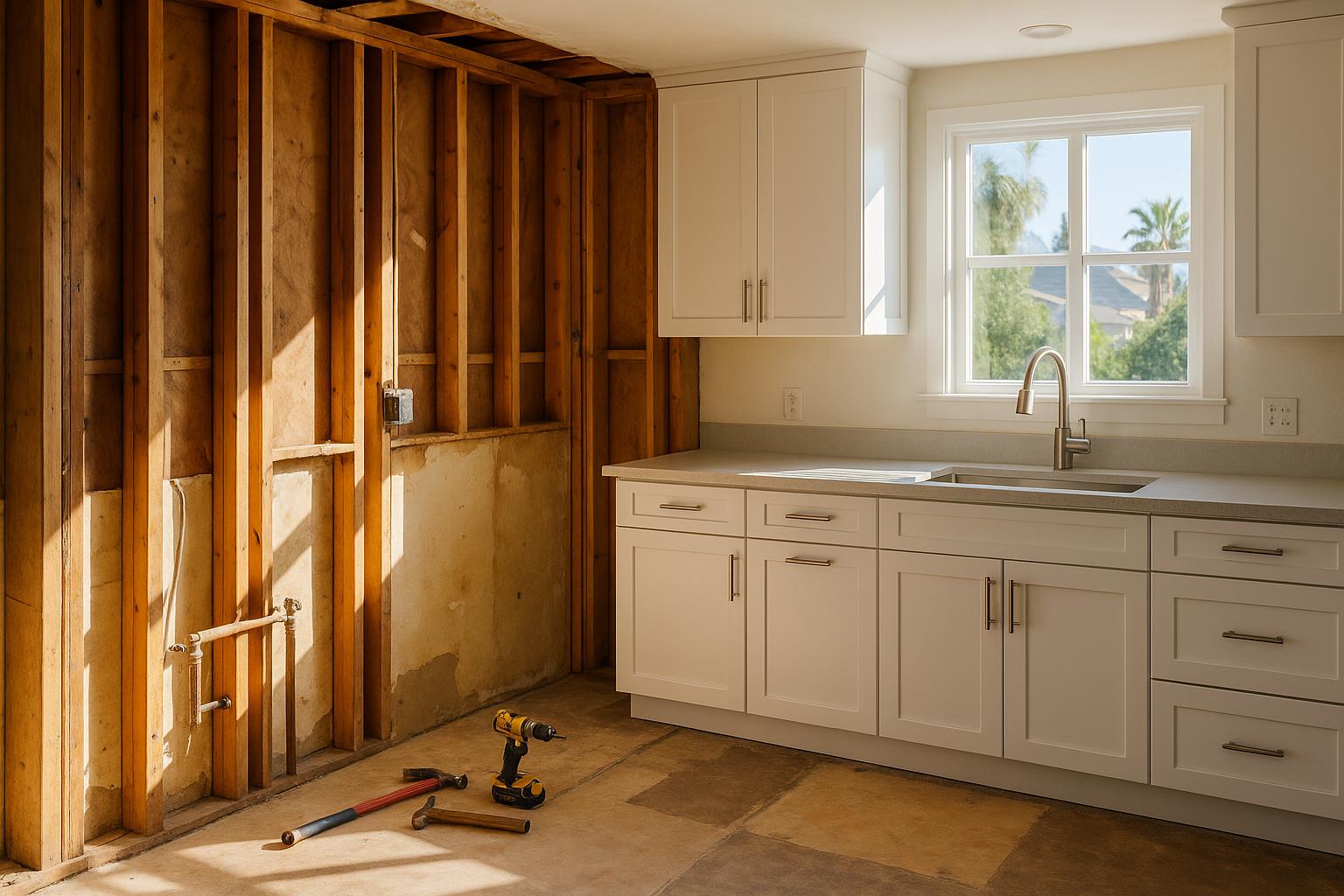
This is when things get real. Your old kitchen comes out, and the space is stripped down to the studs — or close to it.
What happens during demolition
- Old cabinets, countertops, flooring, and fixtures are removed
- Walls may be opened up if you're changing the layout
- Your contractor assesses the condition of what's behind the walls — framing, plumbing, wiring
Rough-in work
Once the space is cleared, electricians and plumbers come in to move or add lines based on the new design. If you're relocating your sink, adding an island with a cooktop, or upgrading to a larger electrical panel, this is when that work happens.
In San Diego's older neighborhoods like Mission Hills, Point Loma, and Clairemont, homes built in the 1940s through 1970s sometimes reveal outdated wiring or galvanized plumbing during this phase. A good contractor builds contingency time into the schedule for exactly these kinds of discoveries.
Weeks 3–4: Inspections, Drywall, and Prep Work
After the rough mechanical work is complete, the city inspector comes out to verify everything meets code. This inspection needs to pass before walls can be closed up.
- Drywall installation and finishing: New drywall goes up, gets taped, mudded, and sanded smooth. This takes several days because each coat of joint compound needs to dry before the next one is applied.
- Painting prep: Walls and ceilings get primed. Some homeowners choose to paint now; others wait until after cabinets are installed.
- Subflooring: If the floor needs leveling or repair, that happens now too.
This phase can feel slow because you're watching mud dry — literally. But rushing drywall work leads to visible seams and an uneven finish, so patience here pays off.
Weeks 5–6: Cabinets, Countertops, and Flooring
Now the kitchen starts looking like a kitchen again. This is the phase most homeowners get excited about.
Cabinet installation
Custom or semi-custom cabinets are carefully installed and leveled. This typically takes two to three days depending on the size of the kitchen. Once cabinets are in, countertop fabricators come out to do a final template measurement.
Countertop fabrication and installation
After templating, stone or quartz countertops usually take about one to two weeks to fabricate. Once they arrive, installation is typically completed in a single day.
Flooring
Whether you've chosen tile, luxury vinyl plank, or hardwood, flooring usually goes in during this window. The sequencing depends on the material — some floors go in before cabinets, others after. Your contractor will determine the best approach for your specific project.
Weeks 7–8: The Finish Line
The final two weeks are all about the details that bring everything together.
- Backsplash tile installation: This goes in after countertops are set. Depending on the pattern and material, tile work can take two to four days.
- Fixture installation: Faucets, garbage disposals, light fixtures, outlets, and switch plates all get installed.
- Appliance hookup: Your new range, dishwasher, refrigerator, and range hood are connected and tested.
- Final paint touch-ups: After all the installation work, walls and trim get any needed touch-ups.
- Final inspection: The city does a final walkthrough to sign off on all permitted work.
- Walkthrough with your contractor: You'll go through the finished kitchen together, create a punch list of any minor items that need attention, and get those resolved before the project is officially complete.
What Can Affect Your Timeline
An eight-week construction timeline is realistic for a mid-sized kitchen remodel, but several factors can extend or shorten that window:
- Scope of work: A cosmetic refresh with new cabinets and countertops on the existing layout will be faster than a full gut renovation with structural changes.
- Material lead times: Custom cabinetry, imported tile, or specialty appliances can add weeks. Making selections early helps avoid delays.
- Permit processing: San Diego permit timelines fluctuate depending on the season and the complexity of the project.
- Unexpected discoveries: Water damage, termite damage, or outdated systems found behind walls can add time. This is especially common in older homes throughout Pacific Beach, Ocean Beach, and other established San Diego neighborhoods.
- Decision-making: Delayed selections or mid-project changes are the most common cause of schedule disruptions. The more decisions you finalize before construction begins, the smoother things go.
How to Set Yourself Up for a Smooth Remodel
A few practical tips to keep your kitchen remodel on track:
- Set up a temporary kitchen — a microwave, coffee maker, and small fridge in another room will make the weeks without your kitchen much more livable.
- Finalize all selections before demo day — this is the single most impactful thing you can do to keep the project on schedule.
- Communicate regularly with your contractor — a weekly check-in keeps everyone aligned and helps you address small issues before they become big ones.
- Build a buffer into your expectations — even well-managed projects can hit a snag. Expecting eight weeks but mentally preparing for ten keeps stress levels low.
Your Kitchen Remodel, Without the Guesswork
At Sovereign Home Extensions, we walk every San Diego homeowner through a detailed project timeline before work begins. We believe you deserve to know exactly what's happening in your home and when. No vague estimates, no surprises — just clear communication and quality craftsmanship from start to finish.
If you're thinking about remodeling your kitchen, we'd love to talk through your vision and give you a realistic timeline tailored to your specific project. Reach out to start the conversation.